Cybersecurity is no longer a background concern or an IT department issue that only surfaces after something goes wrong. In 2026, cyberattacks have become faster, more automated, and more targeted toward small and medium-sized businesses.
Many business owners assume attackers are focused on large enterprises or government systems. In reality, smaller organizations are often easier targets because they typically have fewer security layers, limited monitoring, and inconsistent employee training.
The modern threat landscape has shifted. Attacks are no longer random—they are automated, AI-assisted, and continuously scanning for vulnerabilities.
For businesses in sectors like legal services, healthcare, construction, finance, and nonprofits, the risk is even higher due to sensitive data and operational dependency on digital systems.
The reality is simple: cybersecurity can no longer be reactive.
Why Small Businesses Are Being Targeted More Than Ever
Cybercriminals follow efficiency. They look for the easiest entry point, not the biggest name.
Small and mid-sized businesses are targeted because:
- They often lack 24/7 monitoring
- They use outdated or unpatched systems
- Employees are not consistently trained on phishing risks
- Password reuse is common
- Security tools are often fragmented or missing
Attackers increasingly use automated scanning tools that identify weak systems within minutes. Once identified, ransomware or data theft can occur without human interaction.
The Rise of AI-Powered Cyberattacks
One of the most significant changes in recent years is the use of artificial intelligence by attackers.
AI is now used to:
- Generate highly convincing phishing emails
- Clone writing styles of executives
- Automate password guessing attacks
- Identify vulnerabilities faster than manual scanning
- Adapt attacks based on security responses
This means traditional “spot the typo” phishing training is no longer enough. Emails are now nearly indistinguishable from legitimate communication.
Common Cyber Threats Facing Businesses in 2026
1. Phishing & Business Email Compromise (BEC)
Attackers impersonate executives, vendors, or clients to trick employees into transferring funds or sharing credentials.
2. Ransomware Attacks
Data is encrypted and held hostage until payment is made. Even if payment is made, recovery is not guaranteed.
3. Credential Theft
Stolen passwords from previous breaches are reused across business systems.
4. Insider Risks
Not all threats are external—employees with excessive access can cause accidental or intentional damage.
5. Cloud Misconfigurations
Improperly configured cloud storage continues to expose sensitive business data.
Why Traditional Antivirus Is Not Enough
Many businesses still rely solely on antivirus software as their primary protection. While antivirus is still part of the stack, it is no longer sufficient.
Modern cybersecurity requires:
- Endpoint Detection and Response (EDR)
- Real-time monitoring
- Behavioral threat analysis
- Email filtering systems
- Multi-Factor Authentication (MFA)
- Patch management systems
- Network segmentation
Cybersecurity today is about visibility and response—not just prevention.
The Real Cost of a Cyberattack
The financial impact of a cyberattack extends far beyond the initial breach.
Businesses often experience:
- Operational downtime
- Lost revenue
- Data recovery costs
- Legal and compliance issues
- Customer trust erosion
- Increased insurance premiums
For small businesses, even a short disruption can create long-term financial instability.
Building a Layered Security Strategy
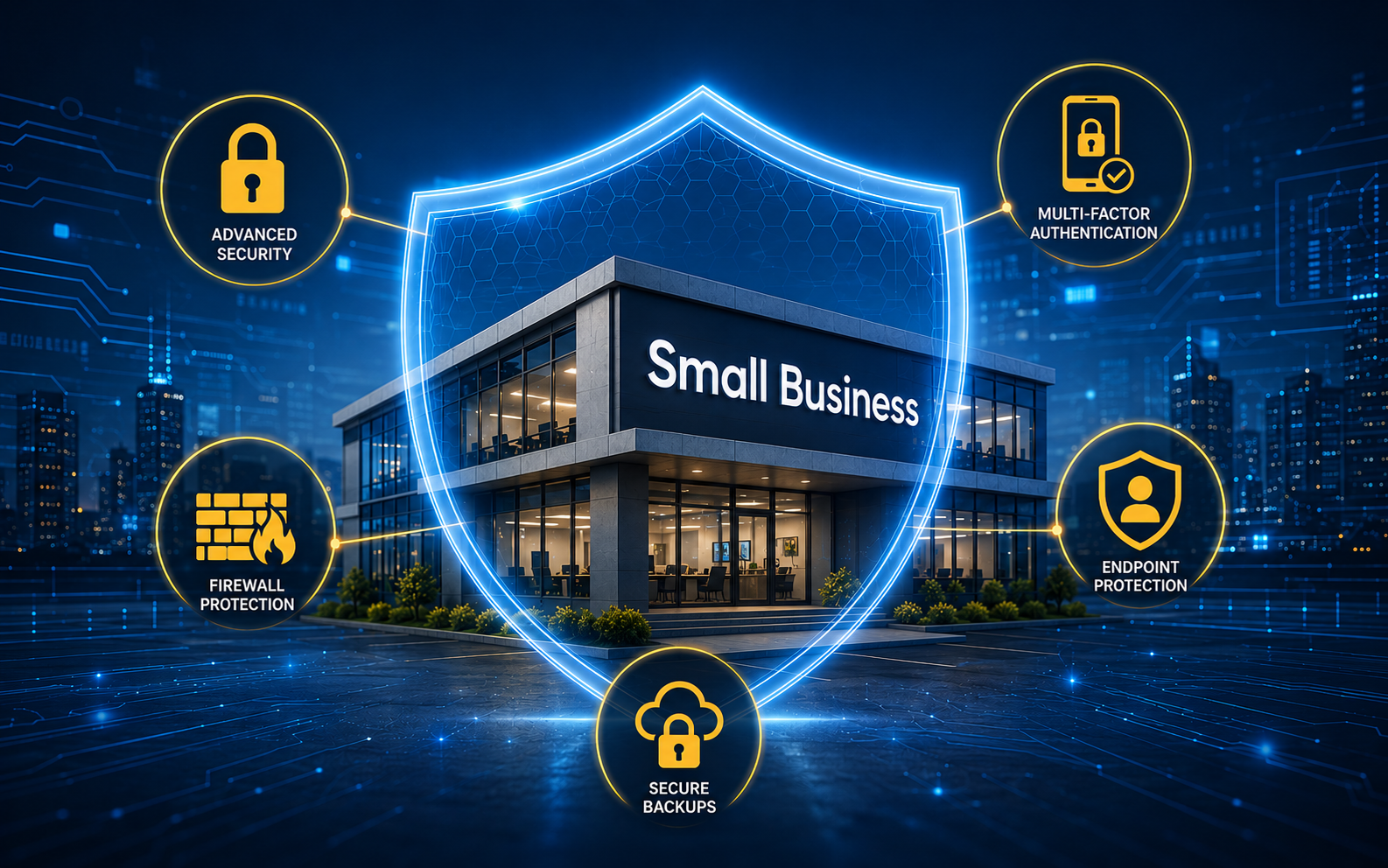
A strong cybersecurity posture relies on multiple overlapping defenses.
Essential Layers:
1. Identity Protection
- MFA everywhere
- Strong password policies
- Role-based access control
2. Endpoint Protection
- Managed EDR solutions
- Device encryption
- Real-time monitoring
3. Network Security
- Firewalls
- Secure VPN access
- Network segmentation
4. Email Security
- Advanced spam filtering
- Phishing detection tools
- Domain protection (SPF, DKIM, DMARC)
5. Human Layer
- Employee training
- Phishing simulations
- Security awareness programs
The Importance of Continuous Monitoring
Cybersecurity is not a one-time setup. It is a continuous process.
Without monitoring, businesses may not detect a breach for weeks or even months. During that time, attackers can:
- Steal data
- Escalate privileges
- Install persistent backdoors
Continuous monitoring ensures threats are identified and contained early.
How CaliCoders Helps Protect Businesses
CaliCoders provides a proactive cybersecurity approach designed specifically for small and mid-sized businesses in the Inland Empire.
Our approach includes:
- 24/7 monitoring and alerting
- Managed cybersecurity services
- Endpoint protection and response
- Employee security training
- Patch and vulnerability management
- Backup and recovery planning
- Strategic IT guidance
Instead of reacting after damage occurs, we focus on preventing disruptions before they happen.
Cybersecurity in 2026 is defined by speed, automation, and constant evolution. Businesses that rely on outdated or reactive approaches are increasingly exposed to risk.
The most effective strategy is proactive defense built on layered security, continuous monitoring, and employee awareness.
Security is no longer just an IT function—it is a business survival function.
Protect your business before the next attack targets it.
Schedule a Cybersecurity Assessment with CaliCoders and identify your biggest security gaps today.
To get started, call our office at 909-654-6444 or click here to schedule a consultation.